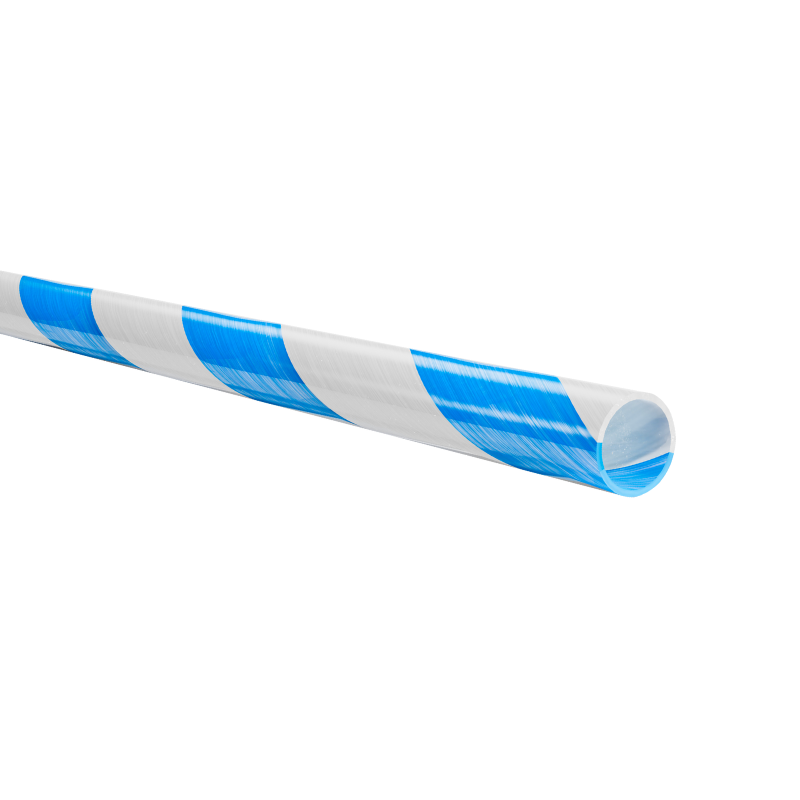
A clear understanding of heat-shrink performance often begins with the thickness of the material after full recovery. This measurement directly influences flexibility, device profile, and integration in micro-scale assemblies. jMedtech addresses this critical need with its PTFE Zebra Spiral Heat-Shrink Tubing, which offers a recovered wall thickness as low as 0.002 inches (0.051 mm). This ultra thin wall heat shrink tubing enables the construction of slimmer, higher-performance medical devices without compromising on mechanical integrity or dielectric strength.
Understanding Wall Thickness in Heat-Shrink Tubing
Wall thickness refers to the final dimension after the tubing has completely shrunk. With ultra thin wall heat shrink tubing, engineers can achieve a slimmer device profile while still maintaining mechanical stability. jMedtech’s PTFE constructions deliver consistent performance, especially where low-friction surfaces and precise dimensions are required.
jMedtech’s Material Engineering and Micro-Dimension Capability
Among its advanced offerings, jMedtech provides PTFE Zebra Spiral Heat-Shrink Tubing featuring ultra-fine inner diameters down to 0.127 mm. These components are available in shrink ratios reaching 6:1, as well as 5:1, 4:1, 3:1, and 2:1. Such specifications support micro-engineering demands where controlled shrink behavior is essential.
Customizable Zebra Spiral Designs for Advanced Applications
The zebra spiral pattern enhances visibility during assembly and clinical use. jMedtech allows customization of stripe configurations, tubing sizes, and recovery ratios to support unique requirements in minimally invasive treatments and precision-guided systems.
Conclusion
Through its refined PTFE designs, jMedtech provides ultra thin wall heat shrink tubing that combines clarity, micro-scale precision, and exceptional compatibility with advanced medical applications. The customizable zebra spiral structures further extend versatility, helping device designers meet increasingly complex engineering challenges.
