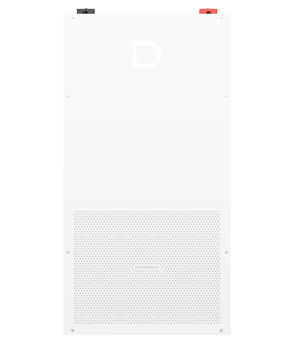
Across manufacturing floors, food processing plants, and logistics centers, electricity bills are often the second-largest operational expense after labor. Yet many industrial managers still treat energy as a fixed cost rather than a controllable variable. This is where commercial & industrial (C&I) energy storage transforms the equation. By shifting consumption away from expensive peak-rate periods and reducing demand charges, battery energy storage systems have become essential tools for cost optimization. Dyness, a company built on research, development, production, and sales of energy storage systems, offers scalable solutions like the PowerBrick—a low-voltage product designed originally for household scenarios but equally relevant for light industrial applications requiring compact, modular storage.
Peak Shaving: The Direct Path to Lower Demand Charges
Most industrial electricity bills include a demand charge based on the highest 15- or 30-minute average power draw during the month. A single machine start-up or a simultaneous production shift can spike this figure, locking in higher costs for an entire billing cycle. Commercial & industrial (C&I) energy storage systems discharge precisely during those brief high-power windows, effectively “shaving” the peak. The Dyness PowerBrick, featuring 280Ah long-cycle battery cores, supports reliable daily cycling, ensuring that each peak event is met with stored energy rather than expensive grid power.
Time-of-Use Arbitrage Without Production Interruptions
For facilities operating two or three shifts, the difference between daytime peak tariffs and nighttime off-peak rates can be substantial. Battery energy storage systems automate arbitrage: charging overnight when power is cheap, then discharging during morning and afternoon peaks. The PowerBrick supports a maximum of 50 parallel units, with 14.3kWh to 716.8kWh energy coverage, providing a safe, reliable, intelligent, and friendly experience. This scalability means a small machine shop can start with one unit, while a large assembly plant can expand to 716.8kWh without changing hardware platforms.
Reducing Transformer and Infrastructure Strain
Industrial parks often face limited transformer capacity, making new equipment additions expensive or impossible without costly upgrades. A commercial & industrial (C&I) energy storage system acts as a buffer, supplying burst energy behind the meter and reducing peak draw on the transformer. This deferral of infrastructure investments represents a hidden but substantial cost optimization—one that Dyness solutions address through modular, parallel-ready designs.
Closing View: Storage Turns Energy from a Cost into a Controllable Asset
Industrial energy cost optimization is not about using less power; it is about using the right power at the right price. Battery energy storage systems deliver that control through peak shaving, tariff arbitrage, and infrastructure relief. With Dyness offering flexible, long-cycle solutions like the PowerBrick—capable of expanding from 14.3kWh to over 700kWh—industrial operators can begin optimizing today and scale as their savings grow. In the race to lower operating costs, C&I storage is no longer optional; it is essential.
