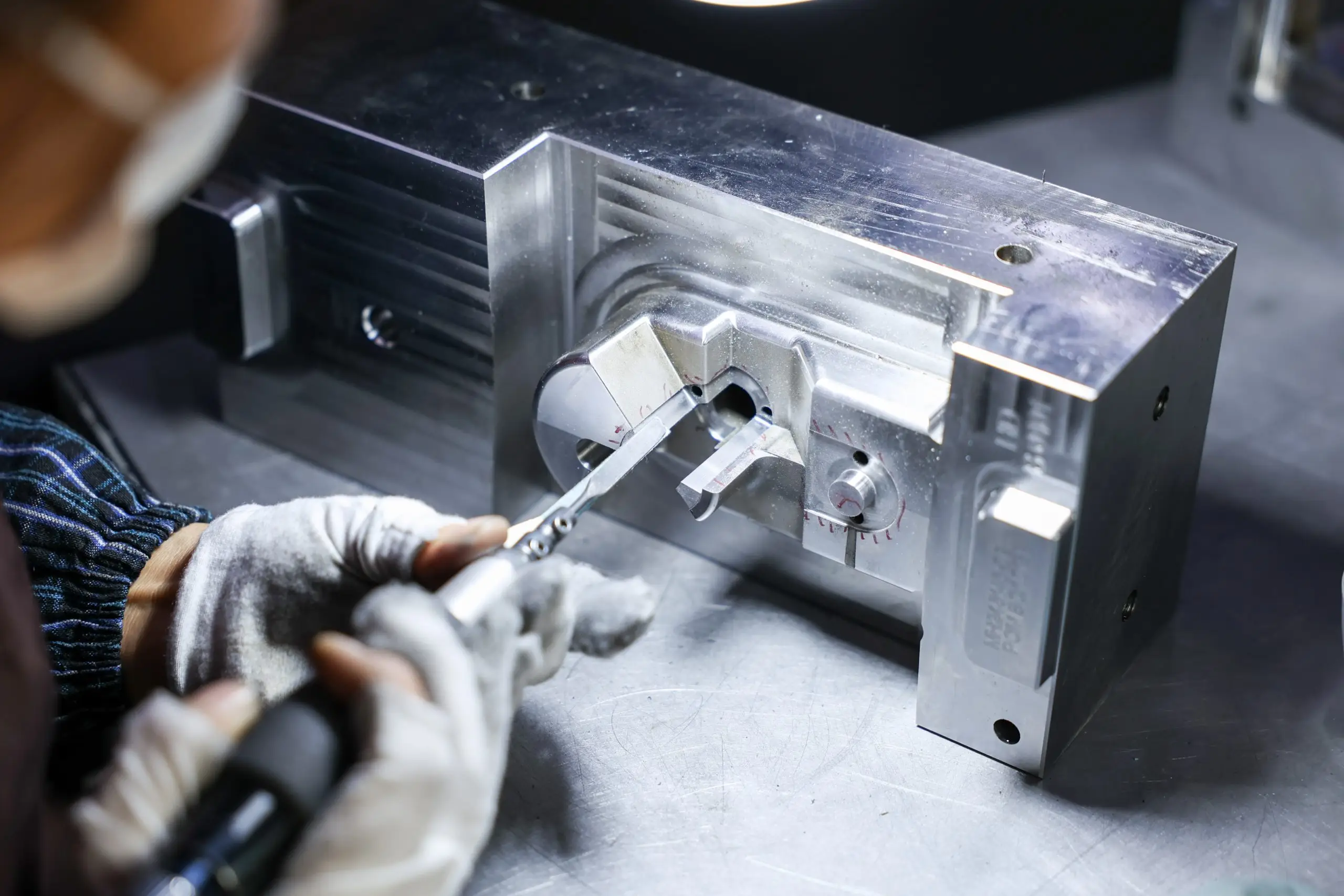
Searching for rapid tooling China suppliers can produce dozens of seemingly similar manufacturing options. Yet country of origin alone says little about whether a supplier can actually deliver a usable mold on schedule. For engineering and procurement teams, the more useful question is what infrastructure sits behind the quotation: standardized mold bases, DFM capability, machining capacity, inspection procedures, and injection-molding resources.
HordRT’s rapid tooling operation illustrates this broader evaluation. Its published service combines tooling design, CNC machining, mold assembly, trial molding, dimensional inspection, and low-volume production rather than treating mold fabrication as an isolated service.
China Is Only the Starting Point for Rapid Tooling Sourcing
A China-based supplier can offer geographic access to a large manufacturing ecosystem, but the practical value depends on how well that supplier integrates engineering and production.
Rapid tooling is typically used when a company needs molded parts sooner than a conventional production-mold program might allow. HordRT describes its service as supporting prototypes, short production runs, functional verification, process verification, and low-volume manufacturing.
That means buyers should evaluate more than the quoted mold price. A supplier with tooling capability but limited molding or inspection resources may introduce additional handoffs after the mold is completed. An integrated supplier can move from design review to tooling, trial molding, inspection, and parts production within one manufacturing workflow.
HordRT currently operates manufacturing facilities in Zhuhai and Zhongshan, Guangdong, with the Zhuhai site focused on tooling and injection molding and the Zhongshan site specializing in CNC machining, die casting, and sheet metal fabrication.
Look at the Tooling System, Not Just the Tool Price
A low quotation does not automatically indicate an efficient tooling solution. Tool construction, mold-base availability, machining strategy, and expected tool life all affect the actual economics of a project.
HordRT states that its rapid tooling operation uses shared mold bases and reports having hundreds of standardized bases. The company says this system can reduce tooling costs by 30–50% compared with traditional production tooling. That figure is a company-reported claim rather than an industry-wide benchmark.
The underlying principle is easier to evaluate than the percentage itself. A reusable mold base can reduce the amount of tooling hardware that must be manufactured specifically for an individual project. The supplier can concentrate machining resources on the cavity and core inserts while using standardized components where appropriate.
Material selection also needs to match the intended purpose. HordRT identifies P20 steel as one rapid-tooling option and also describes aluminum prototype tooling for projects requiring particularly fast development.
Engineering Communication Determines How Fast a Project Moves
Tooling schedules can be disrupted long before machining begins. Ambiguous CAD geometry, unclear tolerances, incomplete material specifications, or unresolved parting-line decisions can create engineering iterations that add more time than machining itself.
For that reason, DFM should be evaluated as part of the supplier’s manufacturing capability rather than treated as an optional document. HordRT states that DFM is provided within 24 hours after order confirmation, followed by tooling design and main-steel cutting after approval.
The supplier’s published workflow includes review of mold structure, followed by CNC machining of cavity and core inserts, machining of auxiliary components, fitting, polishing, inspection, trial molding, and dimensional inspection of initial samples.
For overseas buyers, this sequence has another implication: communication quality becomes part of manufacturing performance. Clear feedback on draft angles, gates, ejection, tolerances, and mold structure can prevent avoidable revisions before steel or aluminum is cut.
Shared Mold Bases Change the Economics of Short Runs
Traditional production tooling is generally designed around long-term manufacturing requirements. Prototype and low-volume projects have a different economic profile because the expected number of parts may not justify every feature of a dedicated production mold.
HordRT describes rapid tooling as particularly suitable for on-demand and low-volume production, using standardized mold-base systems to reduce tooling investment. Its published service information also states that there is no minimum order quantity for its rapid tooling service.
This model can be useful for products that need functional samples, engineering builds, or an initial quantity before demand becomes predictable. The manufacturer does not necessarily have to make the same upfront tooling commitment required for a long-life production program.
However, buyers should still define expected quantity, resin, surface requirements, tolerances, and anticipated design changes before choosing the mold architecture. A shared-base solution is valuable only when its standardization is compatible with the component being manufactured.
Quality Control Has to Continue Beyond Tool Manufacturing
A finished mold is not proof that the resulting parts will meet engineering requirements. The mold has to be trialed, the molding process has to be established, and the first parts need to be inspected against the drawing or approved specifications.
HordRT’s published rapid tooling workflow sends completed tooling to its injection-molding workshop for testing. Initial samples are checked by engineers before dimensional inspection. The company also describes process-parameter optimization, equipment maintenance, and calibration as measures used to reduce tooling-related defects.
This distinction is important for international procurement. A supplier should be evaluated according to the complete chain from tool design to accepted parts rather than solely according to machining capability.
Quality documentation should also correspond to the project’s actual requirements. Buyers can define critical dimensions, appearance criteria, material specifications, inspection methods, and sample-approval procedures before production begins.
The Better Supplier Is the One That Connects Tooling to Parts
For companies evaluating rapid tooling China suppliers, the most meaningful comparison is therefore operational rather than geographical. Can the supplier interpret the CAD data, recommend an appropriate tooling structure, manufacture the inserts, trial the mold, inspect the samples, and continue into low-volume molding if required?
HordRT presents its rapid tooling service as supporting the transition from prototype development to short-run production. Prototype and bridge tooling can be used for design validation, pilot builds, and limited production, while production tooling is intended for repeat manufacturing. Its additional capabilities include injection molding for plastic parts, CNC machining for precision metal and plastic components, die casting for complex metal parts, and sheet metal fabrication for formed and assembled components.
That integrated model can reduce the number of manufacturing handoffs during a product-development program. It also gives engineering teams a clearer route when a prototype moves beyond simple validation and becomes an early production requirement.
The practical lesson for buyers is straightforward: evaluate the manufacturing system behind the mold, not the phrase “China” or the lowest initial quotation. A capable partner should provide a coherent path from DFM review and tooling construction through trial molding, inspection, and parts delivery.
For companies considering rapid tooling China as part of their sourcing strategy, that distinction is critical. The strongest supplier relationship is built around transparent engineering communication, appropriate tooling architecture, controlled quality, and the ability to support the product after the mold itself has been completed.
