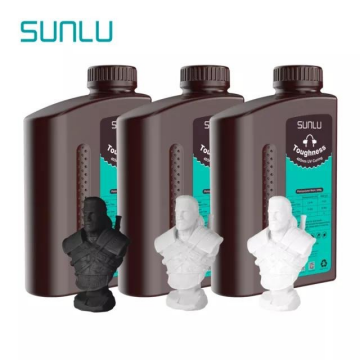
In resin 3d printing, a part needs more than fine detail when it will be handled, assembled, or exposed to impact. Material choice, print orientation, geometry, and post-processing all influence performance.
A toughness-focused resin may suit functional prototypes and practical components, but the right choice depends on the forces, temperatures, and working conditions the finished part will encounter.
What Makes a Resin Print Suitable for Functional Use?
A display model may mainly need a clean surface, while a functional part may experience pressure, bending, repeated handling, or impacts. Before selecting a material, identify what the component needs to withstand, how precisely it needs to fit, and the temperature it may encounter. No single resin property predicts performance in every situation.
Compare the material’s mechanical data with the intended application. Tensile strength describes resistance to pulling forces; flexural strength relates to bending; impact strength indicates how a sample responds to a sudden strike; and elongation at break measures how far it stretches before breaking. These values describe different behaviors and should not be treated as interchangeable.
Understand the Mechanical Properties
The published specifications for the featured toughness resin are:
| Property | Listed value |
| Tensile strength | 20 MPa |
| Flexural strength | 20 MPa |
| Notched Izod impact strength | 120 J/m |
| Elongation at break | 50% |
| Shore hardness | 72 |
| Heat deflection temperature | 45°C |
The product information also lists mold shrinkage at 8%. Treat these figures as comparison points rather than promises for every printed object: actual performance depends on geometry, orientation, exposure settings, washing, curing, and how the part is loaded. Test parts designed for a specific task instead of relying on a data sheet alone.
Design Around the Intended Load
Geometry matters alongside material properties. Orient the part so its important features are well supported during printing, and keep walls reasonably thick and ease abrupt changes in section where stress may concentrate.
Add fillets around internal corners when the design allows, and test screw holes or snap-fit features on a small prototype before scaling up. Small design changes can improve function without relying on material choice alone.
Where Toughness Resin Can Be Useful
The sunlu toughness resin is a candidate for functional prototypes, covers, housings, fixtures, and parts that may be bent or knocked during normal handling. Its product information also states that printed models can be drilled and tapped, which may be useful when a prototype needs fasteners or assembly features.
These properties do not make a printed part suitable for every mechanical task. A thin tab, sharp internal corner, or hole close to an edge can create a stress concentration regardless of resin choice.
If a component will carry a sustained load, bear the weight of a person, or be used in safety-critical equipment, conduct application-specific testing and seek appropriate engineering review.
Set Up the Print with the Right Baseline
The product page lists different exposure ranges for color LCD and monochrome LCD printers. Use them as initial values and confirm the settings for the printer, resin temperature, layer thickness, and model geometry.
| Setting | Color LCD | Monochrome LCD |
| Bottom exposure time | 20–80 seconds | 10–60 seconds |
| Layer exposure time | 4–15 seconds | 1.5–4 seconds |
The listed starting ranges also include 5–10 bottom layers and a lifting speed of 60–120 mm/min. These are not a single fixed profile. Check printer compatibility, make a brief calibration print, and adjust based on adhesion, detail, and dimensional accuracy. Change one variable at a time, so the cause of a print problem remains clear.
Wash, Cure, and Inspect the Finished Part
After printing, remove excess liquid resin using the specified process and let the part dry before post-curing. According to Formlabs’ post-processing guidance, washing and post-curing are important steps for resin prints, and some materials require a specified curing process to achieve their intended mechanical properties. Follow the material manufacturer’s instructions rather than applying another resin’s schedule.
Inspect thin walls, holes, mating surfaces, and support contact points before using the part. Check that features fit as designed and test under realistic conditions. The listed heat deflection temperature of 45°C is particularly relevant if the component may become warm; do not assume it will retain its shape in hotter environments.
Choose Resin for the Job
The resin collection includes materials for different printing goals. Compare the required balance of detail, flexibility, toughness, and temperature performance before choosing a formulation.
A well-matched resin, a validated print profile, and correct post-processing can make results more repeatable, but none replaces testing the finished component.
For details on the SUNLU resin lineup, including toughness-focused options, see its product pages. Toughness-focused resin may be a practical option when impact resistance and bending matter, while the right choice still depends on the design and its real operating conditions.
In functional resin 3d printing, reliable results come from matching material data to the use case and checking the completed part before relying on it.
