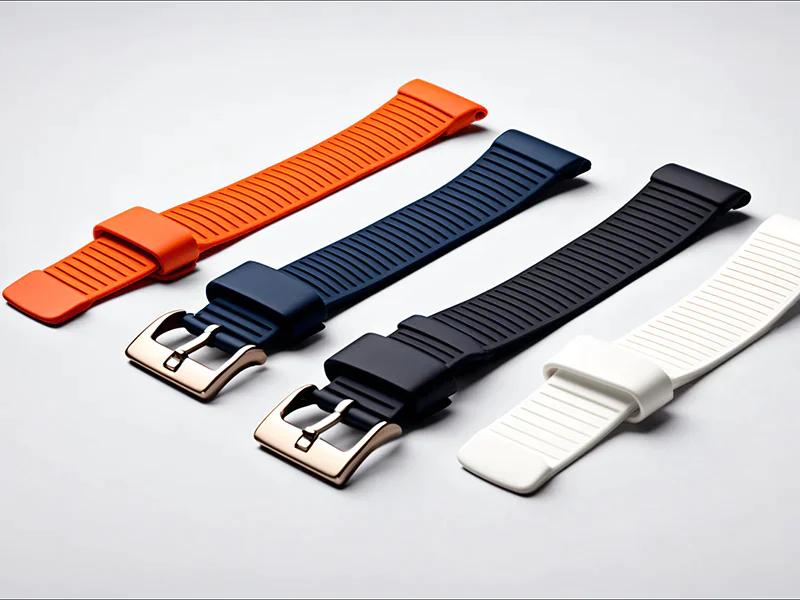
Solid silicone rubber is widely used in automotive components, electrical insulation, industrial seals, and consumer products because of its flexibility, heat resistance, and weather durability. However, the performance of the finished material depends on more than the properties of silicone itself. Reinforcing fillers play an important role in determining its strength, elasticity, processing behavior, and service life.
Among these materials, silica filler for rubber is particularly important. When properly selected and incorporated, silica can significantly improve the mechanical properties of solid silicone rubber while helping manufacturers meet specific application requirements. Understanding how silica works can help material engineers choose suitable formulations and achieve more consistent production results.
Why Solid Silicone Rubber Needs Reinforcing Fillers
Solid silicone rubber offers excellent resistance to temperature changes, aging, and environmental exposure. Yet unfilled silicone generally has limited tensile strength, tear resistance, and abrasion resistance for demanding mechanical applications.
Reinforcing fillers address these limitations by strengthening the rubber matrix. Their particle characteristics, surface properties, and dispersion within the compound influence how effectively stress is transferred through the material.
Silica is especially valuable because it can reinforce silicone rubber without compromising the material’s fundamental flexibility when the formulation is properly designed. This balance is essential for products that must withstand repeated deformation while maintaining their shape and structural integrity.
How Silica Filler for Rubber Enhances Mechanical Strength
Improved Tensile and Tear Resistance
Tensile strength determines how much pulling force a material can withstand before breaking, while tear resistance measures its ability to resist the growth of a cut or defect. Both properties are important for silicone seals, rollers, gaskets, and molded components exposed to mechanical stress.
Suitable reinforcing silica can improve these properties by creating interactions with the silicone polymer network. The resulting structure helps distribute applied stress more effectively and reduces the likelihood of localized failure.
For manufacturers, this improvement can support the production of more durable components, particularly where repeated stretching, compression, or handling is expected.
Better Elasticity and Shape Retention
Solid silicone rubber must often return to its original shape after compression or deformation. Silica reinforcement can help improve the balance between elasticity and structural stability, depending on the filler type, loading level, and curing system.
The goal is not simply to maximize hardness. Excessive filler loading or poor dispersion may increase processing difficulty and reduce elongation. Instead, manufacturers need a formulation that provides sufficient reinforcement while preserving the flexibility required by the final application.
The Role of Silica in Solid Silicone Rubber Processing
Mechanical performance is only one consideration when selecting a silica filler. Processing behavior also affects manufacturing efficiency, product consistency, and overall production costs.
The particle size, surface area, moisture content, and dispersion characteristics of silica can influence compound viscosity, mixing requirements, and curing behavior. Poorly dispersed filler may create weak points, surface defects, or inconsistent mechanical properties across a finished product.
A suitable silica grade can help manufacturers develop a more stable compound when used with an appropriate mixing process. Consistent raw material quality is equally important because variations in filler characteristics may require adjustments to formulation or processing conditions.
For this reason, silica selection should consider both the desired properties of the cured rubber and the practical requirements of mixing, extrusion, molding, and vulcanization.
How to Select the Right Silica Filler
Choosing silica for solid silicone rubber requires evaluating the intended application rather than relying on a single material specification.
First, identify the most important performance requirements. Electrical insulation components may prioritize dielectric performance and dimensional stability, while industrial seals may require stronger tear resistance and reliable compression behavior. Products exposed to frequent movement may need a careful balance between reinforcement and elongation.
Next, consider compatibility with the existing formulation. Silica characteristics can affect viscosity, dispersion, and interactions with silicone polymers and other additives. Testing different grades at appropriate loading levels can reveal how each option influences the overall compound.
Manufacturers should also assess batch consistency, technical documentation, and supplier support. Evaluating tensile strength, elongation, tear strength, hardness, and processing behavior under consistent test conditions provides a more reliable basis for comparison than considering any one property in isolation.
Improving Transparency, Resilience, and Aging Resistance
Beyond mechanical reinforcement, silica can influence the appearance and long term performance of silicone rubber. For products where appearance matters, transparency and resistance to discoloration may be important selection criteria.
Specialized silica grades can help improve transparency, reduce stretch whitening, and support faster recovery of the original appearance after stretching. These characteristics are useful for visible silicone components, extruded profiles, and products that undergo repeated deformation. Silica may also contribute to wear resistance and aging resistance, depending on the formulation and operating conditions.
However, these benefits are not identical across all silica grades. Manufacturers should evaluate the material’s performance under actual processing and service conditions rather than assume that every reinforcing filler delivers the same results.
BACOSIL® Silica Solutions from JSJ Silica
For manufacturers seeking a suitable silica filler for rubber, JSJ Silica offers the BACOSIL® series for both liquid silicone rubber and high temperature vulcanized silicone rubber. With adjustable oil absorption value, specific surface area, and particle size, these silica grades help manufacturers balance reinforcement, dispersion, transparency, flexibility, and processing efficiency according to their formulation and production requirements.
Selecting the right silica grade requires considering the silicone rubber system, manufacturing method, and performance targets of the finished product. By evaluating filler properties alongside formulation compatibility and laboratory test results, manufacturers can identify suitable materials and improve product consistency. JSJ Silica supports this process with BACOSIL® silica solutions designed for different silicone rubber applications. Manufacturers can explore the available grades and request relevant technical data or samples to assess their suitability for specific production needs.
Learn more about BACOSIL® silica solutions for silicone rubber and find an option that meets your application requirements.
