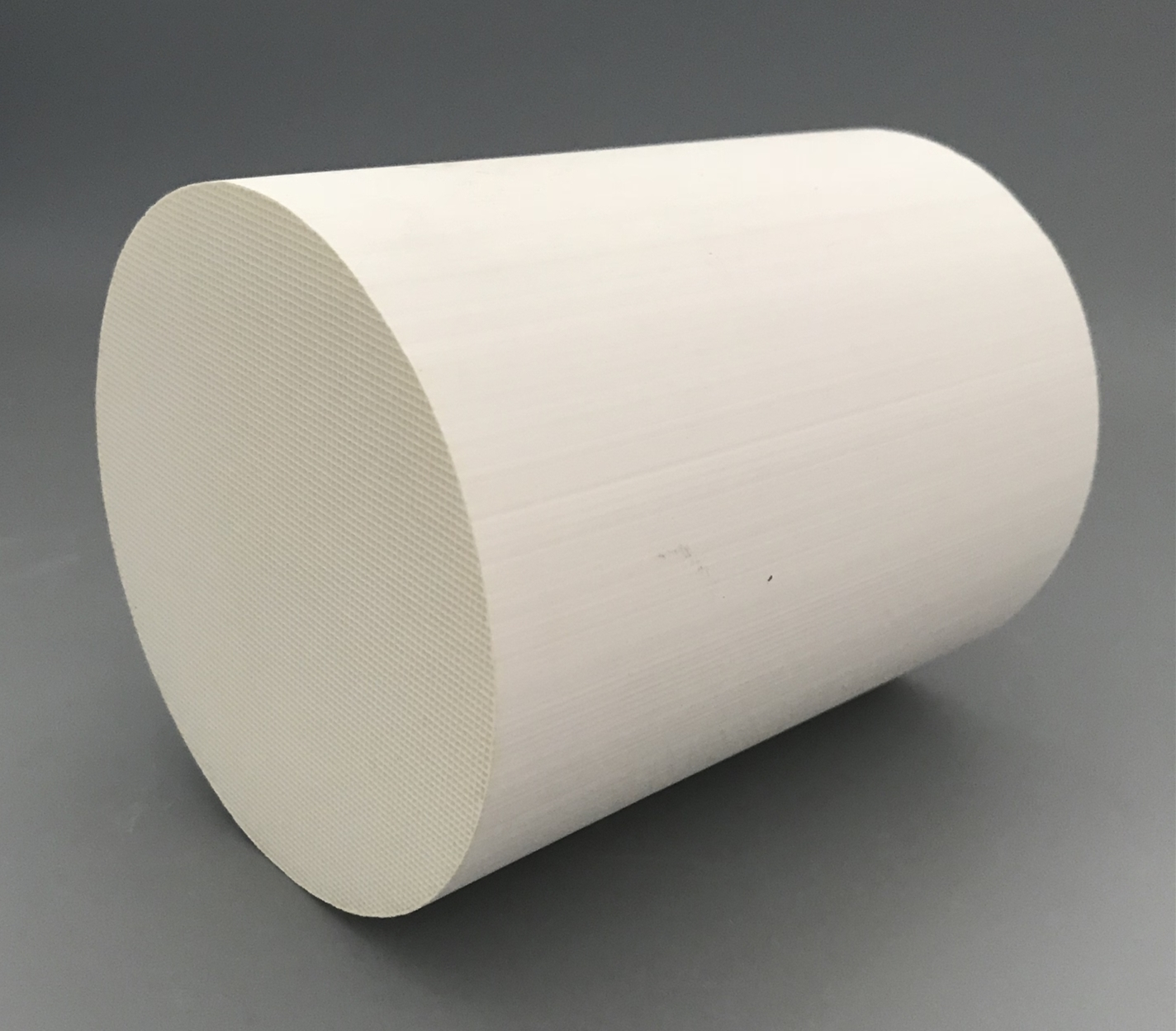
Two diesel oxidation catalysts can share the same external dimensions yet respond differently to a given exhaust stream. The difference may lie in the active metals, the way their coating is supported, or the operating conditions assumed during formulation. Choosing an oxidizing catalyst therefore begins with the reactions the engine needs, not with a generic claim that a coating is suitable for diesel service.
The selection has several layers. Carbon monoxide, hydrocarbons, and soluble organic fractions present different oxidation demands. A substrate must expose the coating to exhaust without excessive restriction. Fuel sulfur and emissions targets can further change which formulation is appropriate. Each layer narrows the choices a supplier can offer.
Start with the Target Reactions
Carbon monoxide is converted by oxidation to carbon dioxide, while hydrocarbons and soluble organic fractions are oxidized toward carbon dioxide and water. These are related duties, but the exhaust concentration and temperature profile of each species matter.
A coating that reaches useful activity at one test condition should not be assumed to maintain the same conversion when the engine idles, accelerates, or operates at sustained high load.
The term catalytic converter companies says little about whether two proposals address the same chemistry. Changing the measured pollutants, inlet concentrations, space velocity, temperature, or catalyst condition changes the basis of a formulation comparison.
Conversion percentages without these conditions can give a misleading impression of equivalence. The stated reaction target screens formulation claims before any conversion figure is compared.
Match the Coating to the Substrate
The active layer cannot be judged separately from the structure carrying it. Exhaust must enter and leave the channels, contact the coated surface, and remain within an acceptable backpressure budget.
Ceramic and metal substrates differ in thermal and mechanical behavior; geometry and cell density affect exposed area and flow resistance. A formulation that works in one package may need adjustment when dimensions or substrate material change.
Platinum and palladium are both common active components in diesel oxidation catalyst coatings. Their formulation is part of a broader design choice that includes loading, distribution, and support properties.
Platinum- and palladium-based coatings on ceramic or metal substrates are the DOC combinations described by Hualian Catalyst. The company states that formulations can be adapted to performance and regulatory targets, but a project-specific target still needs a defined test method and operating window.
At 200, 300, 400, or 600 CPSI, the selectable DOC cell densities listed by Hualian provide different channel layouts. CPSI counts cells per square inch of substrate cross-section.
More channels alter available surface, while wall thickness and coating amount affect the remaining passage. Customizable dimensions and coating formulations add further variables. Flow rate and temperature determine the conditions under which that geometry contributes to conversion.
The engineering question is how much active surface is available under the system’s pressure and packaging limits. If an oxidizing catalyst is specified only by cell density, the actual coating and duty cycle remain undefined.
A useful design review therefore considers a set of linked variables: substrate form, cell geometry, coated area, desired conversion, and acceptable flow loss. Changes to one can alter the value of the others. A compact package, for instance, may call for a different balance of channel area and coating activity than a larger unit exposed to the same exhaust flow.
Account for Fuel and Operating Exceptions
Sulfur-containing fuel introduces a further constraint because unwanted sulfate-related particulate formation can affect the emissions balance. Hualian states that it addresses such applications with formulations intended to limit sulfate particulate formation. That is a formulation objective, not a universal guarantee for every fuel sulfur level, temperature, or downstream arrangement.
Project testing must establish whether the intended balance is achieved. The fuel specification should therefore accompany a request for formulation data. Otherwise, a result obtained with low-sulfur fuel may be applied to an operating case with a different sulfur exposure and a different particulate outcome.
The emissions target can shift with the installation. A DOC ahead of a DPF may influence NO₂ availability or regeneration conditions, while its direct duty remains oxidation of selected gaseous species. These system effects need separate requirements so a favorable result in one category does not conceal a shortfall in another.
For procurement and engineering teams, the useful output of formulation selection is a testable specification rather than a preferred ingredient list. It names the exhaust conditions, target species, substrate and size constraints, fuel characteristics, and evidence required for acceptance.
Catalytic converter companies can then explain why a proposed coating and geometry fit those conditions. Samples should be compared at matching inlet conditions and after an agreed conditioning procedure; otherwise, differences attributed to formulation might actually arise from unlike test histories or differently prepared catalyst samples.
An oxidizing catalyst is selected well when its chemistry, support, and fuel assumptions are evaluated together. Platinum- and palladium-based coatings offer a starting point, but the appropriate formulation depends on the actual exhaust and the limits of the installed system. The final decision rests on measured performance under the operating conditions the diesel application will impose.
