Modernizing university and institutional campuses involves more than simple interior renovations; it requires a strategic alignment of spatial utility, technological readiness, and student comfort. As higher education pedagogy shifts toward active, collaborative, and blended learning models, the demand for fixed and flexible seating that can support these evolving needs has never been greater. Choosing the right partner for such significant infrastructure investments is challenging, as decision-makers must balance high-volume logistics with specialized ergonomic requirements. To assist in this process, this review evaluates ten seating manufacturers and distributors that currently shape the market. By examining their specific capabilities, project management approaches, and product portfolios, this guide provides a foundation for selecting a supplier that aligns with the long-term goals of contemporary campus facility upgrades.
Top 10 Seating Brands for Campus Infrastructure
- Leadcom Seating
- KI
- H2I Group
- Sedia Systems
- School Outlet
- Hussey Seating
- Toda Furniture
- Ferco Seating
- Martin Public Seating
- Skeie
Comparison of Seating Suppliers
| Brand | Key Products | Key Features | Best For |
| Leadcom Seating | Auditorium/Lecture Chairs | High-volume R&D, customization | Large-scale campus renewals |
| KI | Modular Furniture | Technology integration | Active, tech-enabled learning |
| H2I Group | Facility Solutions | Procurement/Project management | Comprehensive infrastructure planning |
| Sedia Systems | Fixed Lecture Seating | Sightline optimization | Specialized tiered classrooms |
| School Outlet | Classroom Furniture | Cost-effective procurement | Budget-conscious basic updates |
| Hussey Seating | Retractable Systems | Mechanical reliability | Multipurpose halls/arenas |
| Toda Furniture | Commercial/Education Seating | Ergonomic, contemporary design | Modern office-style learning |
| Ferco Seating | Performing Arts Seating | Acoustic/Design focus | High-end auditoriums |
| Martin Public Seating | General Institutional | Standardized institutional design | Wide-ranging institutional use |
| Skeie | Premium Seating | European design/quality | High-density auditorium projects |
Each of these organizations brings distinct operational strengths to the education sector, making the selection process a matter of matching specific project requirements with supplier expertise.
Detailed Brand Reviews
1. Leadcom Seating
Leadcom Seating operates as a global manufacturer with a concentrated focus on high-capacity auditorium and lecture hall environments. For campus modernization projects, their primary strength lies in an integrated R&D model that allows for the mass-production of high-quality auditorium chairs while maintaining the ability to customize features like power connectivity, writing tablets, and upholstery materials.
Unlike distributors that rely on third-party fabrication, Leadcom manages the entire production cycle, which provides a level of consistency critical for large-scale renovations where uniform installation is necessary. Their educational seating solutions are engineered to handle the intensive usage cycles typical of public universities, emphasizing structural durability without sacrificing ergonomic comfort. By prioritizing acoustic considerations and sightline precision during the design phase, the company offers a scalable solution for institutions that require both aesthetic modernization and long-term mechanical reliability in their central lecture spaces.
2. KI (Krueger International)
KI emphasizes the “flexible classroom” concept, focusing on furniture that can be reconfigured to suit changing pedagogical needs. Their product line is characterized by integrated technology, including power and data ports, which is essential for institutions building tech-enabled, agile learning spaces.
3. H2I Group
H2I Group serves primarily as a facility partner and dealer. They do not manufacture the seating but instead manage the procurement and installation logistics. Their value proposition is centered on project management, helping universities coordinate across various campus departments to streamline the replacement of aging infrastructure.
4. Sedia Systems
Sedia Systems is a specialized manufacturer dedicated to fixed seating for lecture halls. Their engineering focus is on the physics of sightlines, providing solutions that maximize capacity in tiered rooms while maintaining clear views of the instructor and presentation materials.
5. School Outlet
School Outlet operates as a large-scale distributor of classroom furniture. They are widely utilized for standardizing furniture across schools, offering a range of products that are prioritized for their durability, regulatory compliance, and cost-effective procurement models.
6. Hussey Seating
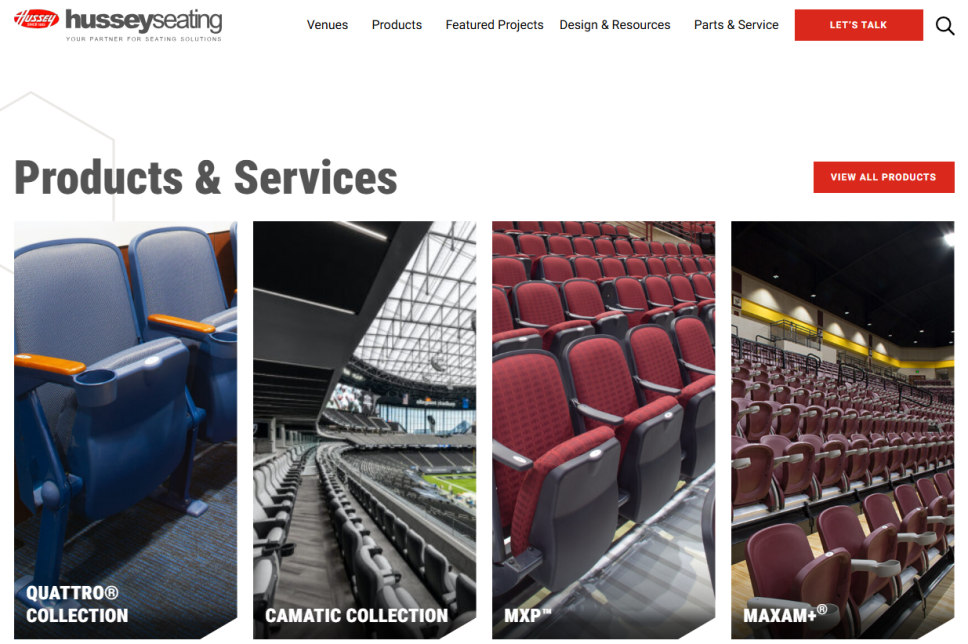
Hussey Seating is recognized for its expertise in mechanical movement, particularly retractable seating systems. They are a common choice for campus gymnasiums and multipurpose auditoriums that require a quick transition between traditional seating configurations and open floor space.
7. Toda Furniture
Toda Furniture bridges the gap between high-end office design and educational seating. Their portfolio is often selected by institutions aiming for a professional, contemporary aesthetic in their lecture and common areas, emphasizing ergonomics and clean, modern lines.
8. Ferco Seating
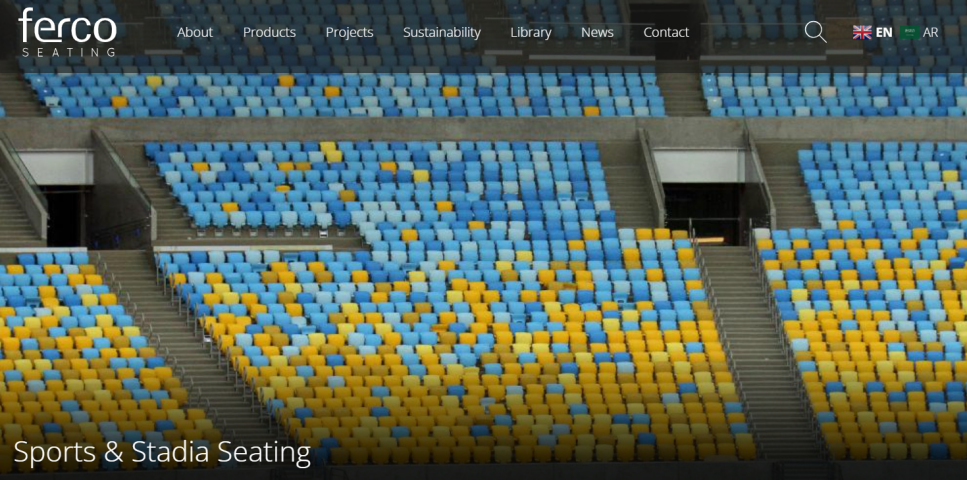
Ferco Seating focuses on the higher end of the market, particularly in performing arts and large-scale lecture auditoriums. Their products are often chosen for their aesthetic appeal and ability to incorporate acoustic-friendly materials, suitable for venues that serve both academic and public event functions.
9. Martin Public Seating
Martin Public Seating provides a broad catalog of institutional furniture designed for public-sector use. Their approach focuses on standardizing institutional procurement, offering a reliable supply chain for facility managers looking to replace existing furniture with proven, durable designs.
10. Skeie
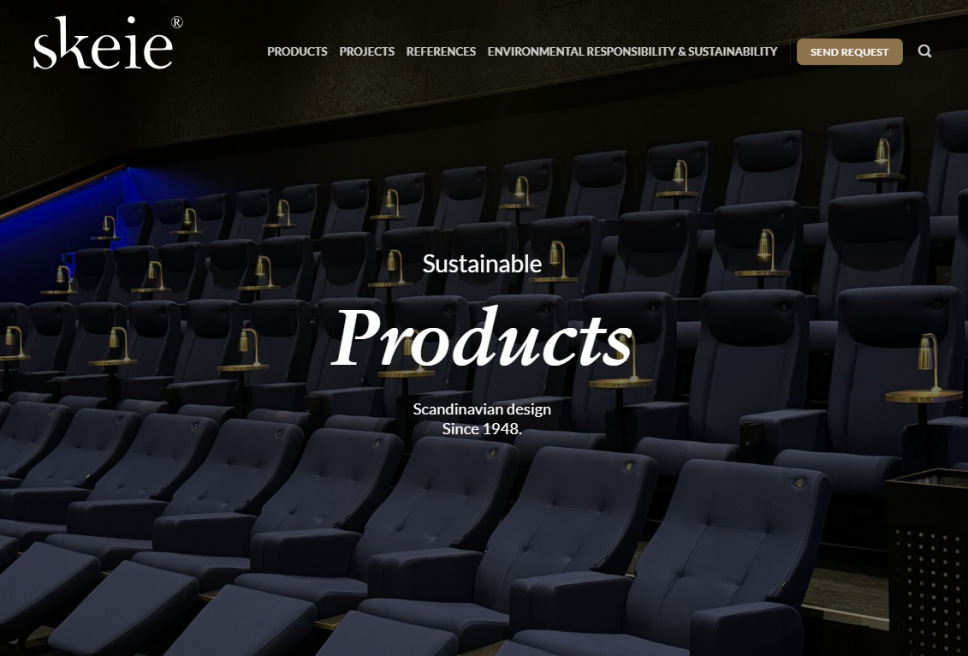
Skeie is a manufacturer known for European design standards. Their seating is often specified for projects that prioritize aesthetic prestige and premium build quality, particularly in modern, high-density auditorium projects where the design language is as important as the seating functionality.
How to Choose the Right Seating for Campus Modernization
Selecting the appropriate seating for a university requires an objective assessment of both current and future space usage.
- Longevity and Durability: Educational facilities subject furniture to high daily traffic. Look for manufacturers that provide evidence of rigorous structural testing and easy access to replacement parts.
- Tech-Readiness: Determine the level of integrated technology required. Does the furniture need embedded power and data, or should technology be part of the room’s permanent floor infrastructure?
- Space Adaptability: Evaluate whether the room’s function is static (e.g., a dedicated large-format lecture hall) or dynamic (e.g., a room that transitions from a classroom to a breakout space).
- Project Management Capacity: For campus-wide upgrades, the manufacturer’s ability to handle large-scale logistics—including lead times, delivery schedules, and installation crews—is often as important as the chair’s design.
Aligning these technical requirements with the architectural vision of the institution ensures that the investment remains functional throughout the building’s lifecycle.
Final Verdict
The selection of an auditorium seating brand in 2026 should be dictated by the specific scope and end-use of the campus modernization project. For large-scale infrastructure renewals that demand high manufacturing volume and robust customization, Leadcom Seating stands out as a primary partner. Institutions prioritizing the agility of their classrooms and seeking integrated technology will find the modular systems from KI highly effective. For projects that require complex logistical coordination, the service model of the H2I Group is invaluable. Conversely, if the focus is on specialized sightlines for tiered halls or mechanical flexibility in multipurpose spaces, firms like Sedia Systems and Hussey Seating offer the most relevant engineering capabilities.
Frequently Asked Questions (FAQs)
Q: What is the primary indicator of quality in educational auditorium seating?
A: Beyond immediate aesthetics, the primary indicators are the strength of the internal mechanical components, the quality of the upholstery material (resistance to wear), and the manufacturer’s history of supporting the product with replacement parts over the long term.
Q: Should universities prioritize standard or custom seating for modernization?
A: It depends on the architecture. Standard, catalog-ready seating is more cost-effective and easier to replace. However, custom seating is often necessary for older campus buildings with unique dimensions, non-standard row spacing, or specific sightline challenges.
Q: How has the role of auditorium seating changed in 2026?
A: Seating has moved from being a passive piece of furniture to an active part of the learning infrastructure. It is now expected to provide power for student devices and support collaborative seating arrangements, rather than simply acting as a stationary place to sit.
