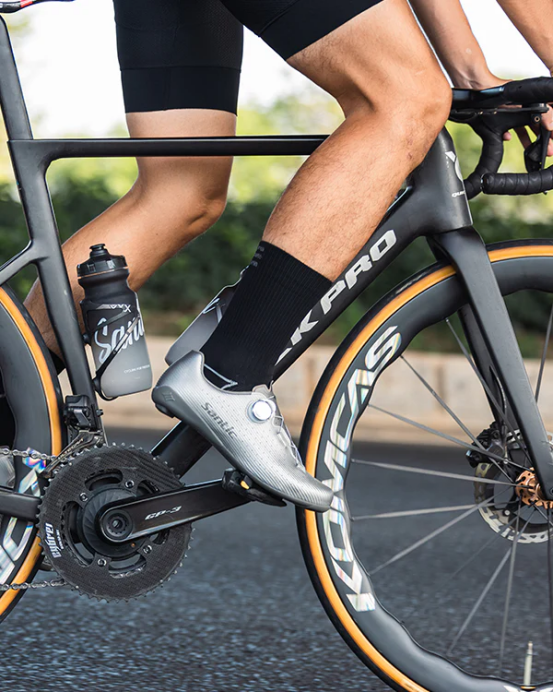
Triathlon cycling has a different rhythm from ordinary road riding because the shoe is part of the transition, not only the bike leg. Athletes may arrive from the swim with wet feet, elevated breathing, and limited time to adjust equipment. That is why triathlon bike shoes are designed around quick entry, ventilation, secure closure, and comfort when socks are not used.
Santic’s cycling shoe guidance points to the practical features that matter in this category: heel loops, wide openings, strap direction, breathability, and stable pedaling support. Flat pedal bike shoes solve a different set of needs, but comparing the two helps riders understand how footwear design changes when speed, safety, and transition efficiency all matter.
The science is practical rather than mysterious. In triathlon, a small movement repeated under stress can either save energy or create confusion. The shoe should help the athlete follow a familiar sequence: locate the opening, pull from the heel, slide the foot in, tighten the strap, and settle into a stable pedaling rhythm.
Why Heel Loops Matter During Transition
Heel loops look simple, yet their function is highly specific. During transition, an athlete may need to pull the shoe onto a damp foot while standing, moving, or preparing to mount the bike. A strong loop gives the hand a clear grip point and reduces the awkward tugging that wastes seconds and disrupts balance. The loop must also be placed where it does not rub the Achilles area once the rider begins pedaling.
A poorly shaped loop can feel fine during a quick test but become irritating over a long bike leg. Good triathlon bike shoes treat the loop as part of the heel structure, not as decoration. This same evaluation can be applied to flat pedal bike shoes when the buyer compares practical use, durability, and order requirements.
Some athletes mount shoes on the bike before leaving transition. In that method, the heel loop helps guide the foot into the shoe while the rider is already rolling. This technique requires practice, but it explains why triathlon footwear often looks more open and accessible than standard road shoes.
Material stiffness must also suit the event. A responsive sole helps transfer power, but the upper cannot be so rigid that it resists quick entry. Triathlon bike shoes therefore need a careful balance between structure and flexibility, especially around the opening where the foot enters during transition.
Straps, Ventilation, and Barefoot Comfort
The closure system on triathlon bike shoes usually favors speed and one-handed adjustment. Wide straps can open quickly, create a large entry space, and allow the athlete to tighten the shoe after gaining momentum. The strap direction matters because it should stay clear of the crank, chain, and frame during movement. Pressure distribution is still important.
A strap that closes fast but squeezes the forefoot can create numbness, especially when the foot swells during a hot event. The best arrangement holds the instep securely while leaving enough room for circulation. Speed at transition should not create discomfort halfway through the bike segment. Ventilation has a scientific reason. Feet may enter the shoe wet from the swim, and evaporation is limited inside a tight upper.
Mesh panels, perforations, drainage openings, and breathable linings help remove heat and moisture. The rider benefits from a shoe that dries gradually without losing foot stability. Barefoot comfort separates triathlon bike shoes from many standard road models. Internal seams, tongue edges, and rough linings can cause blisters when socks are absent.
Athletes should test shoes in realistic conditions rather than relying only on a dry fitting at home. Security after adjustment is just as important as speed before adjustment. A loose strap may feel harmless in transition but become noticeable during accelerations, cornering, or climbing. The athlete should practice tightening while maintaining a straight line and calm posture, because equipment design works best with trained movement.
When Flat Pedal Bike Shoes Are the Better Lesson
Flat pedal bike shoes are not designed for rapid triathlon transitions, yet they teach an important principle: the outsole must match the pedal and the ride. Their grippy soles and walking comfort work well for commuting, casual fitness, or riders who do not want cleats. They provide freedom rather than a locked racing position.
A triathlete choosing between equipment types should consider event distance, transition skill, pedal system, and comfort tolerance. Sprint racing may reward fast transitions more strongly, while longer races punish poor fit and heat buildup. Santic can be discussed as a brand that helps riders compare these details through different cycling shoe categories. Riders who are new to multisport can learn by comparing categories.
Flat pedal bike shoes emphasize freedom and walkability, while triathlon footwear prioritizes transition control and pedaling efficiency. Seeing that contrast helps athletes avoid buying a shoe for the wrong problem and makes equipment selection more logical. Practiced transitions also reveal whether a strap is easy to find when breathing is hard and focus is divided.
Triathlon footwear is effective when small features work together. Heel loops shorten the entry process, straps balance speed with support, and ventilation protects comfort after the swim. The right pair of triathlon bike shoes does not merely save a few seconds; it helps the athlete start the bike leg calmly, pedal securely, and reach the run without avoidable foot irritation.
