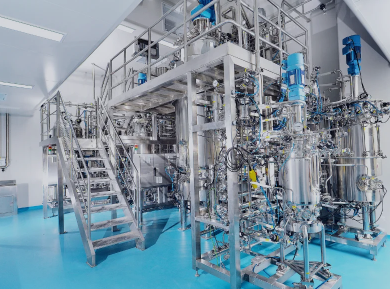
Translating intricate molecular discoveries into reliable clinical treatments remains one of the most demanding challenges in modern pharmaceutical development. Transforming benchtop innovations into large-scale commercial realities requires robust operational capabilities, precise engineering, and rigorous adherence to international quality guidelines. Advanced infrastructure frameworks, such as those maintained by Yaohai Bio‑Pharma, provide the specialized technical foundation necessary for producing high‑quality drug substances and commercial products. Navigating the complex transition from early‑stage discovery to large‑scale manufacturing ultimately depends on an experienced biologics company that combines technical depth with operational discipline.
Exploring Microbial Expression Platforms And Molecular Modalities
Microbial expression systems serve as foundational pillars for producing recombinant proteins, plasmids, and nucleic acid therapeutics efficiently. Selecting an appropriate host organism dictates overall expression yields, proper protein folding, and structural stability. Bacterial and yeast platforms require sophisticated genetic optimization protocols to enhance transcription rates and maintain metabolic stability during large-scale fermentation runs. Comprehensive host screening procedures allow developers to identify optimal expression hosts for specific molecular architectures early in development.
Fermentation parameters demand careful control to minimize inclusion body formation and maximize soluble protein recovery. Bioreactor scaling requires precise management of oxygen transfer rates, nutrient feeding strategies, and thermal profiles. Experienced development teams utilize advanced instrumentation to monitor environmental conditions continuously throughout industrial fermentation cycles. Such systematic oversight minimizes batch-to-batch variance and establishes a solid baseline for downstream recovery processes. Furthermore, Yaohai Bio-Pharma applies these advanced microbial methodologies to support diverse client objectives as a specialized biologics company.
Streamlined Downstream Purification Process for Boosting Supercoiled Plasmid Harvest
Downstream biomanufacturing acts as the foundational procedure to purify circular target plasmids and eliminate contaminants comprising host cellular proteins, residual genomic DNA and bacterial endotoxins.
Gel exclusion and anion-exchange chromatography are adopted as core separation technologies; customized buffer system calibration is necessary to fully distinguish low-activity open circular plasmids from high-purity supercoiled plasmid variants.
Industrial modular filtration systems accommodate massive lysate feedstock from upstream fermentation while securing favorable product retention. Integrating sequential purification steps into the overall production line layout minimizes structural damage to plasmid molecules and cuts down the total duration of production operations.
Cross-Border Compliance Design for Microbial Biologics Global Filing
Regulatory expectations vary across jurisdictions for plasmid, nanobody and recombinant protein therapeutics, creating major obstacles for enterprises planning multi-region clinical submissions. All production operations at Yaohai Bio-Pharma fully align with unified cGMP standards recognized by NMPA, FDA and EMA. Complete, retrievable file archives cover the full production chain from raw material receiving to finished drug release, providing solid evidence for all official audit inspections.
A full-set quality management system runs through every production link of Yaohai Bio-Pharma, covering equipment full validation, standardized staff compliance training and 24-hour cleanroom environmental monitoring. Independent QA teams take charge of analyzing all process abnormalities and launch targeted corrective solutions in advance. The abundant successful audit track record owned by Yaohai Bio-Pharma helps improve regulatory submission readiness of CMC registration documents. The mature compliance system protects patient safety and removes barriers for the worldwide commercial launch of microbial biotherapeutics.
Confidentiality as a Strategic Asset in CDMO Partnerships
For biologic developers, entrusting a CDMO with proprietary cell banks, plasmid vectors, and process parameters goes far beyond signing non‑disclosure agreements—it demands a shared culture of data sovereignty and transparent collaboration. Effective IP protection begins with granular access stratification, where R&D scientists, production operators, and quality auditors view only the data layers relevant to their roles, while all raw analytical files remain encrypted and timestamped on immutable audit trails. Leading contract manufacturers complement this with real‑time activity monitoring that flags unusual retrieval patterns or unauthorized transfers, enabling proactive threat mitigation rather than reactive damage control.
Equally critical is the lifecycle management of reference materials and genetic stocks, supported by dual‑site cryo‑repositories with independent power and network backup to eliminate single‑point failures. Collaborative documentation protocols ensure that every batch record, deviation report, and change control is co‑signed by client representatives in secure virtual data rooms, reinforcing shared accountability and eliminating version‑control confusion. When a CDMO can demonstrate court‑defendable chain‑of‑custody records and transparent data‑sharing frameworks, it supports more efficient client due diligence, shortens legal negotiations, and turns IP stewardship into a tangible competitive differentiator—assuring global partners that their molecular assets are safeguarded with the same rigor applied to manufacturing quality.
Facility Workflow and Layout Efficiency – A Driver for Operational Excellence
The physical arrangement of processing suites, material transfer corridors, and personnel entry points directly influences batch execution speed and contamination risk in biopharmaceutical manufacturing. A well‑designed facility minimizes unnecessary movements between upstream fermentation, downstream purification, and formulation areas, reducing both operator intervention and product exposure time. The separation of high‑risk zones—such as open handling areas—from low‑risk support zones, combined with one‑way material flows, prevents cross‑contamination and simplifies cleaning validation. Such thoughtful layout design not only enhances daily operational efficiency but also shortens batch turnaround, enabling more flexible campaign scheduling for clients with diverse product portfolios.
Beyond spatial planning, the integration of shared utility distribution and automated material handling systems further amplifies productivity gains. Centralized buffer preparation and media storage stations reduce redundant equipment duplication, while pneumatic tube or automated material handling systems streamline sample and consumable transfer between departments. These workflow optimizations lower human error rates and improve data traceability, as each material movement is logged automatically. Yaohai Bio-Pharma exemplifies this integrated approach, with its facility architecture engineered to support seamless process progression and rapid product changeovers, ensuring that clients benefit from both speed and reliability throughout the development and commercial supply chain.
Analytical Strategy – The Compass for Process Understanding and Quality Assurance
A robust analytical strategy serves as the foundation for process understanding, guiding development decisions from early clone selection through commercial batch release. Each assay must be purpose‑built for the molecule’s unique attributes, whether measuring aggregation propensity, charge variants, or biological activity, with method parameters refined iteratively as the process matures. These analytical tools not only confirm product quality at release but also provide early warning signals for process deviations, enabling timely interventions before product quality is compromised. Such proactive usage transforms analytical data from a passive quality checkpoint into an active driver of continuous improvement.
The analytical lifecycle extends well beyond release testing into comprehensive stability monitoring and comparability studies following process changes. Forced degradation experiments reveal degradation hotspots and inform formulation strategies, while long‑term stability data establish expiry dating and guide storage condition recommendations. When unexpected analytical results emerge, a well‑characterized reference standard and robust method validation history enable rapid root‑cause investigation, distinguishing process‑related issues from assay variability. Yaohai Bio‑Pharma embeds this holistic analytical philosophy across its CDMO services, ensuring that each client program benefits from deep product understanding and regulatory‑ready data packages from inception to market.
Conclusion
Selecting an appropriate biopharmaceutical manufacturing partner demands thorough evaluation of technical proficiency, regulatory history, and facility infrastructure. Prioritizing transparency, robust quality control systems, and flexible expression platforms empowers developers to mitigate operational risks effectively. Aligning with experienced microbial contract providers streamlines clinical progression and brings vital therapeutic innovations to the global healthcare market with greater speed and reliability.
