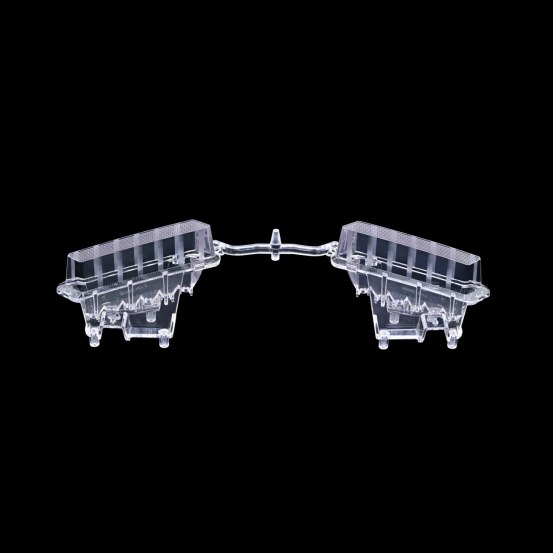
The automotive sector operates under relentless pressure to compress development timelines while simultaneously elevating safety and aerodynamic performance. Designing a modern vehicle involves thousands of interconnected components that must withstand extreme thermal, structural, and environmental stresses over decades. Deploying rapid prototyping automotive methodologies allows development teams to validate complex geometries and assembly tolerances before initiating massive factory rollouts.
The Integration of Multi–Axis Subtractive Machining
Computer-controlled subtractive fabrication remains a foundational pillar for producing high-strength powertrain components, suspension brackets, and engine blocks. Utilizing three, four, and five-axis milling centers allows operators to shape solid blocks of aluminum or steel alloys into highly precise components. This methodology ensures that the structural integrity of the raw metal is fully preserved.
Machined components deliver the exact mechanical strength and heat resistance required for live engine testing and track evaluations. The process accommodates incredibly tight geometric tolerances, ensuring that moving parts interact smoothly without friction or fluid leakage. This reliability is critical when validating steering assemblies or transmission housings.
High–Fidelity Polymer Injection and Cavity Replication
For interior trim panels, dashboard assemblies, and fluid reservoirs, high-pressure cavity replication provides the necessary volume and material realism. This approach fills custom-machined tool cavities with molten engineering plastics under immense clamping pressure to ensure uniform wall thicknesses. The resulting parts replicate the exact weight and flexibility planned for final assembly.
Utilizing transitional soft tooling enables the production of hundreds of identical parts for physical crash testing and aerodynamic wind-tunnel evaluations. This scale allows multiple vehicle prototypes to undergo concurrent testing across different global validation facilities. Consequently, safety compliance data is gathered rapidly across diverse environmental conditions.
Layered Additive Manufacturing for Complex Geometries
Additive deposition techniques have revolutionized early-stage design exploration by constructing complex ducting, bracketry, and custom fixtures layer by layer. This direct digital workflow bypasses the need for physical molds or specialized cutting tools entirely, utilizing engineered plastics to achieve functional results. Complex lattice structures that reduce part weight while maintaining strength are easily realized.
Designers utilize these printed components to conduct immediate ergonomic evaluations, ensuring interior cabin controls and seating spaces maximize passenger comfort. The fast turnaround allows multiple design variations to be tested back-to-back within a single week. This fluid iteration loop accelerates styling approvals and minimizes project stagnation.
Material Diversity and Hybrid Component Assemblies
Modern vehicle development thrives on combining diverse material properties, integrating lightweight carbon composites, specialized aluminum alloys, and high-performance elastomers. Advanced fabrication techniques allow for the seamless mating of these distinct materials within a single functional subsystem. For instance, rigid structural brackets can be overmolded with soft vibration-dampening rubbers.
Testing these hybrid assemblies under realistic load profiles ensures that galvanic corrosion, thermal expansion mismatches, and stress concentrations are managed effectively. Selecting the correct material configuration directly impacts fuel efficiency and vehicle range by trimming unnecessary structural weight. This optimization provides a competitive advantage in a crowded commercial landscape.
Maximizing Aerodynamic Performance and Aesthetic Integrity
Exterior body panels and lighting enclosures must merge impeccable visual styling with strict aerodynamic drag constraints to maximize efficiency. High-precision fabrication processes replicate intricate organic curves, sharp character lines, and complex headlamp reflector optics with absolute fidelity. These physical models undergo intense wind-tunnel testing to map airflow behavior and reduce turbulence.
Mitigating Capital Risk Through Exhaustive Pre–Production Audits
Discovering a packaging clash or a structural weakness after finalizing multi-million dollar stamping dies can cause catastrophic financial losses. Utilizing temporary fabrication solutions creates a robust safety net, allowing engineering teams to audit full-scale vehicle sub-assemblies physically. If a component fails to fit, the digital CAD file is modified and a new part is made rapidly.
Agile Supply Chain Management for Specialty Vehicle Programs
Low-volume specialty vehicles, military transports, and motorsport variants require specialized component manufacturing without the demand for massive factory lines. Agile prototyping technologies adapt smoothly to support these short-run production programs, delivering precise parts efficiently without long-term tooling commitments. This flexibility allows manufacturers to fulfill niche market demands cost-effectively.
Procurement teams can manage fluctuating component demands without maintaining massive warehouses filled with stagnant inventory. Digital blueprint repositories allow parts to be manufactured on-demand as orders arrive, streamlining corporate asset utilization. This lean logistical framework maintains high operational efficiency across complex engineering projects.
Certified Component Production for Automotive Supply Chains
In the high‑stakes world of vehicle engineering, where regulatory compliance is non‑negotiable, having a dedicated manufacturing specialist on the team makes all the difference. APT‑Mold supplies high‑precision solutions that transform complex design concepts into rugged, road‑ready components. The advanced workshop brings together innovative fabrication techniques to produce parts of exceptional accuracy and performance—fully aligned with the industry’s most demanding quality benchmarks.
The production facility at APT-Mold integrates comprehensive design for manufacturing analysis for every project inquiry, optimizing geometries before fabrication begins. Operating under a strict quality control network backed by IATF 16949 certification for component manufacturing, the workshop maintains absolute dimensional consistency across aluminum, steel, and advanced polymers. This professional manufacturing framework empowers engineering teams to deploy rapid prototyping automotive strategies with total confidence in part quality and delivery timelines.
Conclusion
Advanced prototyping workflows serve as the bedrock of modern vehicle innovation, allowing engineering teams to push performance boundaries safely. By balancing speed, material versatility, and precise geometric accuracy, these technologies reduce financial risks and shorten development cycles effectively. Partnering with a certified fabrication facility ensures that novel automotive concepts translate seamlessly into durable, market-ready realities.
