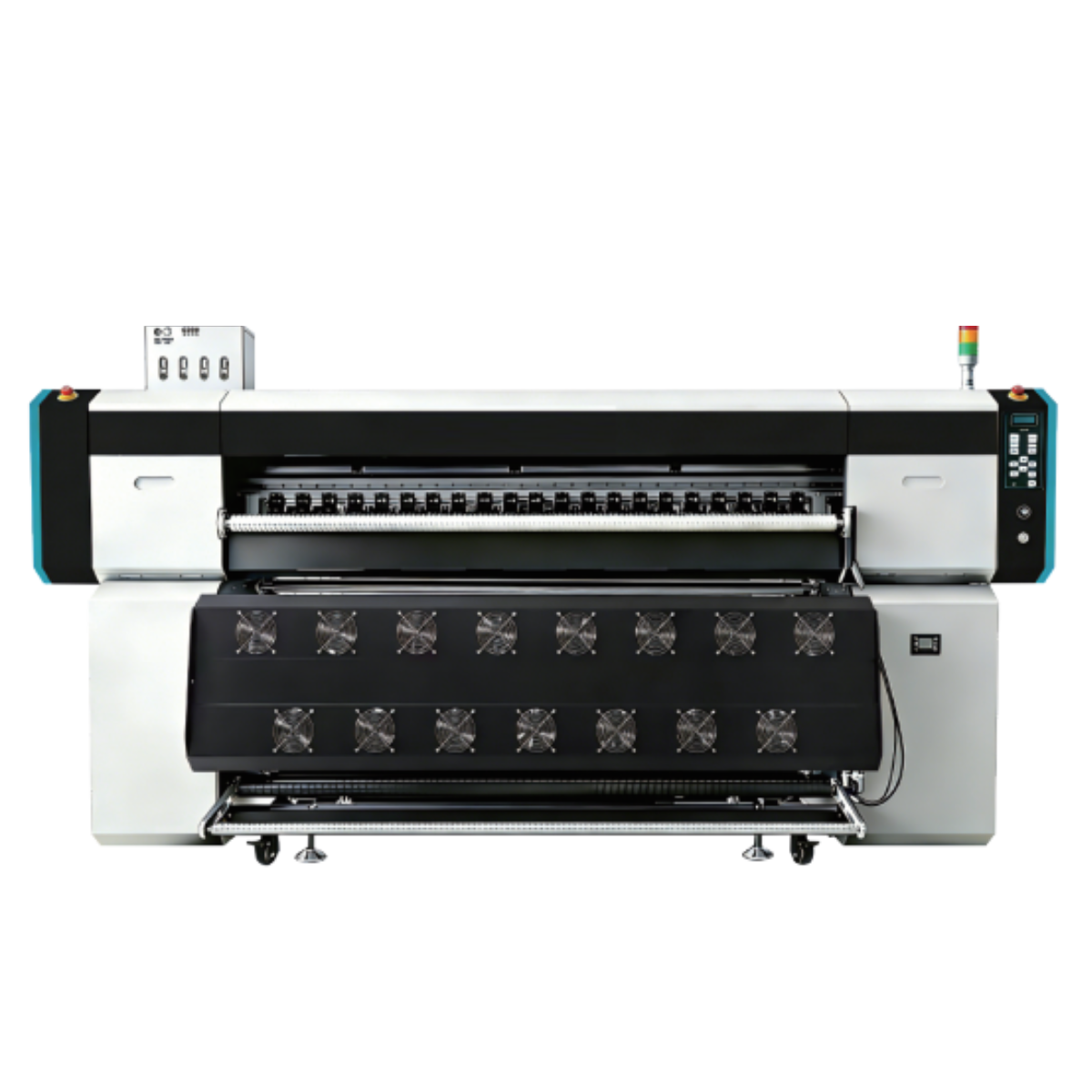
Evaluating digital textile machinery requires print shop operators to balance hardware architecture, ink distribution, and software integration against daily production quotas. Selecting a commercial sublimation printer involves reviewing mechanical specifications rather than relying solely on overall speed ratings.
Investment decisions in industrial printing equipment directly shape operating efficiency, material consumption, and long-term maintenance costs. Understanding core technical parameters enables facility managers to align machinery purchases with specific commercial objectives.
Printhead Architecture and Resolution Capabilities
Piezoelectric printheads govern drop placement accuracy and color transition quality across diverse textile substrates. Multi-head arrangements configured in staggered lines enable commercial systems to maintain steady output during high-density color passes.
Variable droplet technology controls micro-dot volumes to deliver detailed photographic gradients alongside solid color blocks. Evaluating nozzle density and firing frequency helps buyers gauge whether equipment can sustain detailed image rendering under continuous operation.
High-Capacity Ink Delivery Dynamics
Continuous dye delivery systems prevent line starving and ink starvation during extensive print runs. Equipment manufactured by Xinflying incorporates a stable ink supply systerm that minimizes refill frequency and supports uninterrupted batch manufacturing. This high-capacity architecture enables round-the-clock production with minimal operator attendance, translating into higher daily output and faster turnaround for large-volume orders without compromising jetting stability.
Bulk ink reservoirs lower per-milliliter consumable costs while preserving fluid pressure across all channels. Degassing mechanisms and inline filters protect delicate piezo elements from air bubbles and particulate debris. Removing dissolved gases and micron-scale contaminants before ink reaches the nozzles dramatically extends actuator life and sustains drop-ejection uniformity over thousands of operational hours.
Frame Stability and Mechanical Chassis Construction
Structural rigidity prevents frame deflection during rapid carriage passes across wide media spans. Heavy steel chassis construction dampens operational vibrations, maintaining lateral carriage tracking over thousands of production cycles.
Precision linear guides and heavy-duty drive belts convert motor torque into smooth horizontal movement. Industrial hardware platforms, including models such as the XF-O2000-4132, utilize reinforced frameworks to preserve mechanical alignment across high-volume shifts.
RIP Software Integration and Workflow Control
Raster image processor software transforms raw digital artwork into precise raster data and ink limit profiles. Professional setups integrated with specialized RIP platforms, such as RIIN software, give operators control over color mapping, spot channel management, and media nesting.
Advanced software tools calculate precise ink consumption estimates before jobs begin, streamlining job costing for commercial print shops. Automated layout nesting reduces transfer paper waste across complex order batches.
Media Handling and Roll Tension Control
Consistent paper feeding prevents cockling, wrinkling, and head strikes during high-coverage printing. An industrial Sublimation Printer uses active tension sensors and heavy take-up rollers to keep light transfer papers flat across the platen. By preventing paper slack or over-tensioning, the system eliminates media-induced artifacts such as micro-banding and intermittent skips, reducing the need for operator oversight during extended unattended shifts.
Inline heating elements pre-dry transfer paper before rolling, avoiding wet ink transfer between paper layers. Adjustable vacuum platens hold thin substrates securely, ensuring smooth movement through the printing zone. Properly dried and secured media exits the printer ready for immediate heat-transfer or re-rolling, eliminating downstream adhesion issues and preventing costly paper-layer bonding during storage or transport.
Configuration Scalability and Production Speed
Matching hardware capacity with daily order volume keeps print operations running efficiently. Operating a multi-head sublimation printer setup allows commercial facilities to process large fabric orders while keeping unit production costs manageable.
Four-head setups, like those in the XF-O2000-4132 A1 4pcs Epson i3200-A1 Print Heads Sublimation Printer, deliver high square-meter output without compromising line sharpness. Facility planners can scale daily production by adding parallel units as order volume expands.
Maintenance Requirements and Component Longevity
Automated cleaning modules shield delicate nozzle surfaces from dry dye build-up during idle periods. Reliable seal caps and automatic wiping blades keep ink channels ready for operation with minimal manual cleaning.
System durability depends heavily on using high-grade mechanical parts, like linear motion guides and brushless drive motors. Equipment backed by Xinflying uses industrial-grade hardware to lower long-term maintenance costs and prevent unexpected downtime.
Operational Footprint and Environmental Factors
Compact frame layouts help textile print providers optimize floor space in crowded facilities. Modern equipment designs integrate sleek industrial exteriors with easy access to ink channels and routine maintenance zones. This space-saving configuration not only frees floor area for additional auxiliary equipment but also improves operator ergonomics, reducing movement time during cartridge swaps and routine servicing.
Water-based disperse dyes reduce chemical emissions during printing and heat transfer. Efficient ink management systems lower material waste, supporting clean production practices in commercial textile facilities. Straightforward access to critical components minimizes service downtime, enabling faster fault diagnosis and parts replacement without requiring extensive disassembly or specialized tools.
Take the Next Step with Reliable Sublimation Hardware
Choosing the right sublimation printer goes beyond comparing speed figures or brochure specifications. Printhead architecture, ink delivery stability, media handling, and software integration all play a role in shaping daily output and long-term operating costs.
For production managers seeking a dependable partner, Xinflying offers a range of industrial sublimation printers designed with robust mechanical construction, stable ink supply systems, and scalable configurations tailored to real-world shop floor demands. To discuss your specific production requirements or request a machine demonstration, reach out to Xinflying directly and take the next step toward more efficient textile printing operations.
