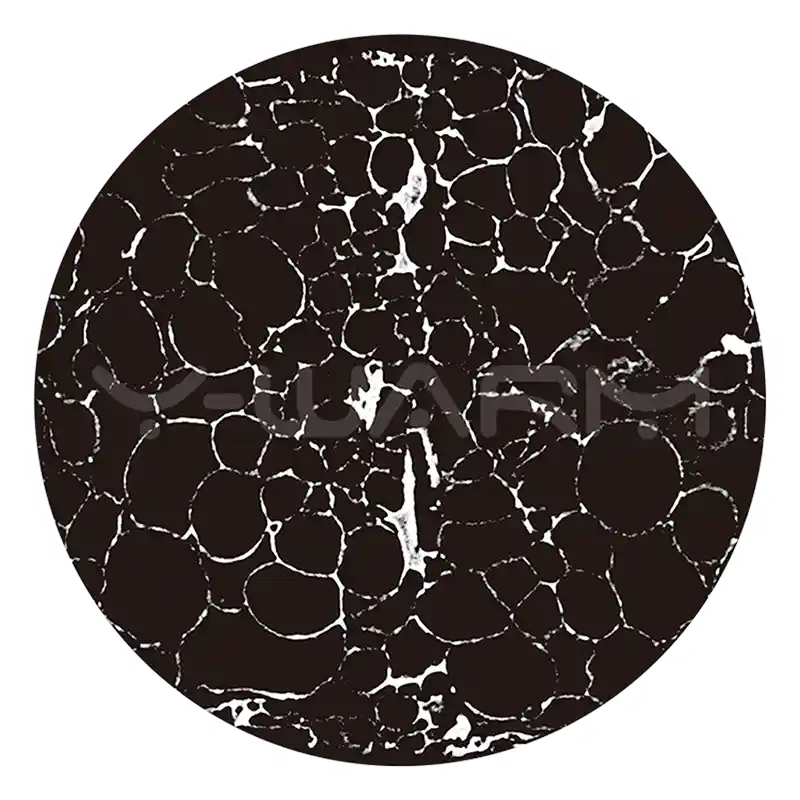
Heat transfer is often influenced by microscopic details that remain invisible in the finished product. The arrangement of pores, the dimensions of internal cavities, and the properties of surrounding solid walls can determine how effectively a material slows thermal energy movement.
In applications where conventional insulation becomes too thick or heavy, advanced thermal insulation offers an alternative approach by controlling heat transfer through carefully engineered microstructures. Understanding these mechanisms helps material developers assess insulation efficiency beyond traditional measurements of thickness and density.
Nanoporous Structures and Their Role in Heat Transfer
The insulating behavior of porous materials is closely connected to the amount of air or gas trapped within their internal structures. In conventional materials, relatively large air spaces can restrict heat movement by reducing direct contact between solid components. However, gas molecules within these spaces can still transfer energy through collisions. As pore dimensions become smaller, molecular movement becomes increasingly restricted, changing the way heat travels through the material.
This phenomenon is particularly important in nanoporous insulation. When pore dimensions approach or fall below the mean free path of gas molecules, collisions with pore walls become more frequent than collisions between molecules. This effect, commonly known as the Knudsen effect, suppresses gas-phase thermal conductivity. Silica aerogels and other nanoporous substances use this principle to achieve low thermal conductivity without depending entirely on substantial material thickness.
The solid framework also plays an important role. Even if the gas phase transfers relatively little heat, energy can still travel through the interconnected solid structure. Engineers must consider the density, composition, connectivity, and thickness of the framework when developing effective insulating materials. Reducing solid conduction while maintaining structural integrity requires careful control of pore geometry and material chemistry.
Microscopic Closed Cells and Low Thermal Conductivity
Closed-cell structures provide another way to restrict heat movement. Unlike interconnected open pores, enclosed cavities limit gas exchange between neighboring spaces and help maintain a stable internal structure. Their insulating behavior depends on cell diameter, wall thickness, polymer composition, and the distribution of cavities throughout the material. Uniformity is particularly important because larger defects or irregular regions may create localized pathways for heat transfer.
The dimensions of internal walls can also influence overall performance. Thin polymer walls reduce the amount of solid material available for conductive heat transfer, while enclosed microscopic cells restrict gas movement. This combination allows engineers to develop flexible insulation layers that occupy considerably less space than many conventional fibrous or foam-based alternatives. However, mechanical strength and resistance to repeated compression must remain part of the design assessment.
Y-Warm applies this structural principle through its next-generation insulation technology, which uses micrometer-scale closed cells separated by nanometer-thick polymer walls. Its material has a reported thermal conductivity of approximately 0.020 W/(m·K), demonstrating how engineered cellular architecture can support effective insulation in an ultra-thin format. This technology is relevant to applications where thermal performance must be balanced with limited available space.
Practical Applications and Material Selection Considerations
Ultra-thin insulation can be particularly useful in products where internal space is restricted. Footwear manufacturers, for example, must balance warmth with toe room, flexibility, and overall shoe weight. Outdoor apparel developers face similar constraints because excessive insulation thickness may affect mobility, garment appearance, and layering compatibility. Industrial designers may prioritize different characteristics, including dimensional stability, operating temperature, and resistance to environmental exposure.
Material selection also involves manufacturing compatibility. Lamination temperature, adhesive coverage, stitching density, and compression during assembly can change the behavior of an insulating layer. Excessive bonding may restrict moisture-vapor movement, while dense stitching can create localized thermal bridges. Production trials should assess whether the material retains its intended properties after cutting, bonding, repeated bending, and other processing operations.
For companies evaluating suppliers, technical documentation should cover more than a single conductivity figure. A capable thermal comfort inc development partner should understand the relationship between insulation architecture, moisture transport, processing requirements, and finished-product testing. Relevant evaluation criteria include thermal resistance, water-vapor permeability, dimensional stability, mechanical durability, and performance under representative environmental conditions.
Conclusion
The efficiency of an insulating material is shaped by its internal architecture as much as its chemical composition. Nanoporous frameworks and microscopic closed cells demonstrate how controlling gas movement and solid conduction can reduce heat transfer without relying on conventional bulk. For developers investigating advanced thermal insulation, the challenge is to translate microscopic advantages into reliable performance across real manufacturing and operating conditions.
Y-Warm is an advanced materials technology company specializing in ultra-thin insulation solutions that integrate thermal protection with moisture permeability and quick-drying functionality. Its approach provides another material option for apparel, footwear, outdoor equipment, and industrial applications. Visit Y-Warm’s official website to explore its technology and discuss potential material applications with its team.
