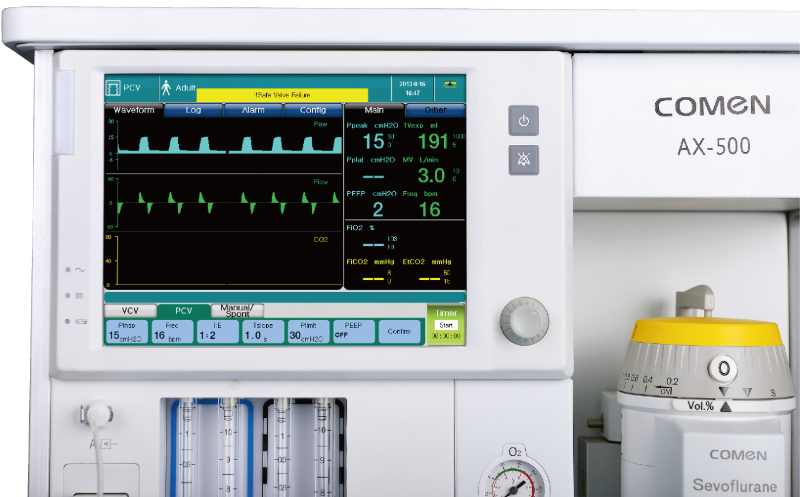
Precise delivery of medical gases and volatile agents remains the core requirement for safe surgical outcomes. COMEN engineers sophisticated workstations designed to manage a patient’s respiratory and physiological state while they are under the influence of anesthetic drugs. The primary role of an anaesthesia apparatus is to mix oxygen, air, and nitrous oxide with precise amounts of anesthetic vapor to maintain a stable state of unconsciousness. By utilizing an integrated anesthesia machine, clinicians can ensure that the patient remains pain-free and adequately oxygenated throughout the entirety of a perioperative procedure.
Precision Gas Mixing and Ventilation Support
Controlling the concentration of inhaled gases is vital for preventing complications during surgery. Advanced electronic flow control systems are implemented in the hardware to maintain a highly accurate gas mixture for the breathing circuit is highly accurate. An anaesthesia apparatus also functions as a high-performance ventilator, offering various modes like SIMV and PRVC to accommodate adult, pediatric, and neonatal patients. This duality allows the anesthesia machine to take over the work of breathing for the patient, maintaining optimal lung expansion and gas exchange even when the central nervous system is suppressed by medication.
Comprehensive Patient Monitoring and Safety
Continuous assessment of vital signs is essential for the anesthesiologist to make real-time adjustments. They incorporate modular monitoring designs that allow an anaesthesia apparatus to track parameters such as CO2 levels, anesthetic gas concentration, and depth of anesthesia through BIS modules. This integrated data approach ensures that the anesthesia machine provides early warnings if there is a drop in oxygen saturation or an unexpected change in hemodynamics. High-resolution touchscreens display these waveforms clearly, allowing the medical team to react instantly to any physiological shifts during the surgical intervention.
Waste Gas Scavenging and Clinical Efficiency
Maintaining a healthy environment for surgical staff is just as important as patient safety. An anaesthesia apparatus is equipped with an Anaesthetic Gas Scavenging System (AGSS) to effectively remove waste gases from the operating room. This prevents long-term exposure for healthcare workers while the anesthesia machine continues to provide stable gas delivery. Furthermore, ergonomic features like heated breathing circuits and easy-to-replace CO2 absorbers streamline the clinical workflow. These advancements reduce the technical workload on the staff, allowing them to remain focused on the patient’s immediate clinical needs.
Consistent performance in the operating theater relies on the seamless integration of mechanical precision and digital monitoring. By providing a stable platform for gas delivery and respiratory support, they help medical facilities achieve a high standard of perioperative care. These technologies ensure that every procedure is supported by reliable hardware, protecting both the patient and the medical professionals involved in their care.
