A guiding company running a season of multi-day expeditions doesn’t set up camp once — it does it dozens of times, often with a rotating cast of guests, weather that doesn’t cooperate, and logistics that punish anything overly complicated. That repetition changes what “good shelter” means.
A weekend camper can tolerate a slightly awkward tent because the inconvenience only happens once. A professional operator running the same setup all season effectively multiplies every design flaw by the number of trips, which is why the shelter choices that hold up for outfitters and basecamp operators often look different from what a casual camper would pick.
The Problem with a Single Undivided Space
Running a basecamp out of one large, undivided tent works for a single group of friends, but it breaks down once an operator manages guests who do not know each other, staff who need somewhere to store gear without guest traffic running through it, or a mix of activities at different hours.
A communal tent with no internal separation puts everyone in the same acoustic and visual space regardless of what they are doing, which becomes a real friction point over a multi-day stay. This is the gap multi-room tent designs are built to close.
Room Division as an Operational Tool, Not Just a Comfort Feature
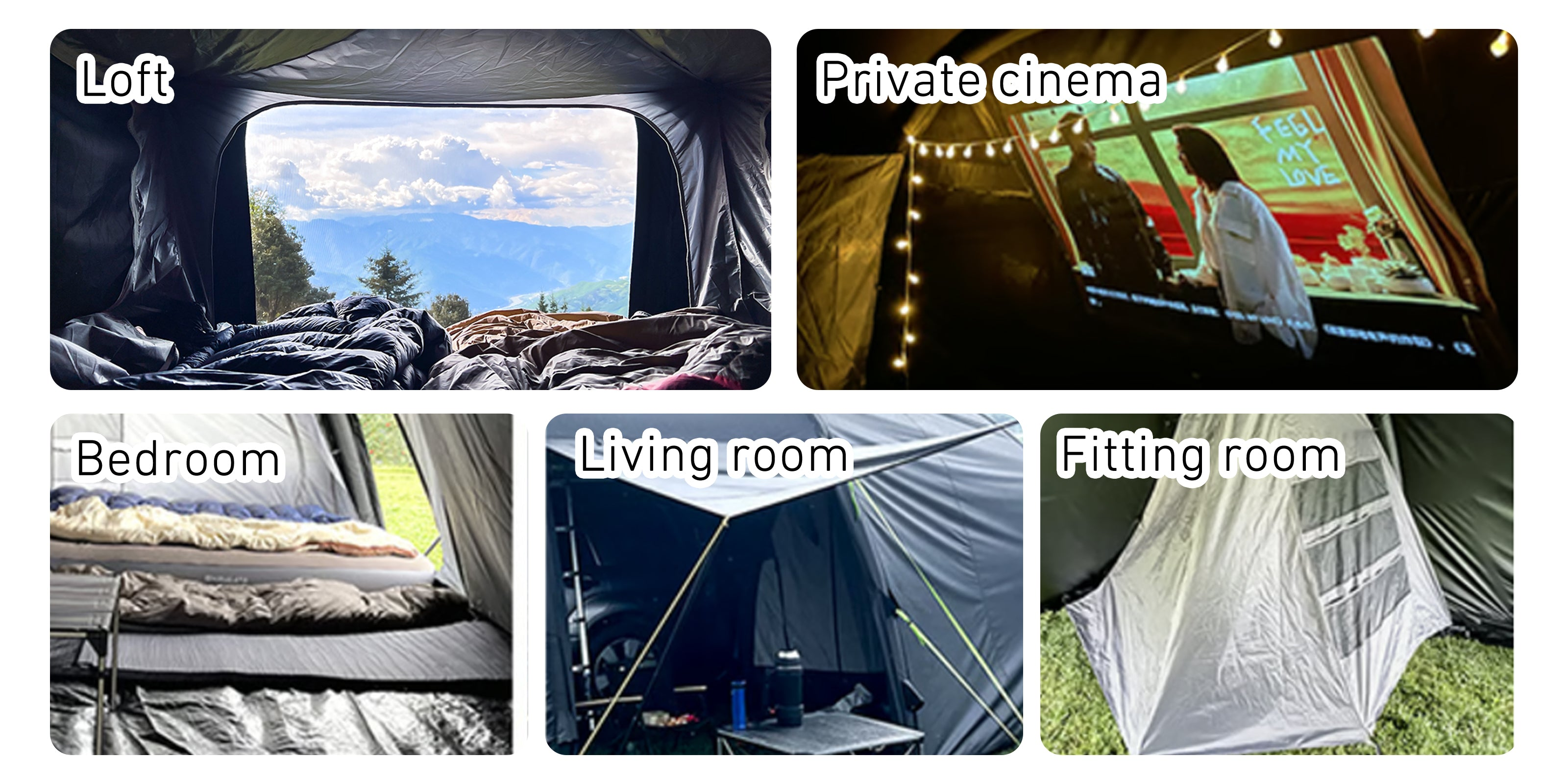
THECATAL’s Magic Fort is a duplex-designed tent with 484 square feet (40 square meters) of interior space that can be divided into different rooms as needed. For an operator, that divisibility works less as a luxury and more as a scheduling tool.
One section can be set aside for gear storage apart from a guest sleeping area, or a private space can be curtained off from a shared common area, without pitching, staking, and maintaining a second structure. At 3.5 m (137.8 in) high, the interior leaves room to stand, and the tent is sized for 12 or more people.
Fast Turnaround Between Sites
Operators who move a basecamp between locations need setup and breakdown that do not eat a disproportionate share of the day. The Magic Fort can be assembled in under 10 minutes, and packed, it takes up about one third of a typical vehicle trunk.
For a glam camping tent that will be relocated repeatedly across a season instead of pitched once and left standing, that pairing of quick assembly and compact storage matters more than it would for a single-use recreational buyer, since the same structure may be broken down and rebuilt dozens of times before the season ends. A first pitch by a new crew will take longer, so a trial setup before the season starts is a sensible habit.
Weather Across a Full Season
A basecamp tent used across a full operating season meets a wider range of weather than a single weekend trip, which makes steady all-round weather resistance more useful than one standout feature.
The Magic Fort is built for year-round use. It is waterproof, windproof, snow-proof, and heat-resistant, and its fabric is silicone-coated 70D nylon. Two-way zippers on both sides are compatible with heating devices, and the tent vents gases while a heater runs, which helps in colder months. Any heater in an enclosed shelter calls for ventilation and a working carbon monoxide alarm.
For an operator, one structure that covers cold periods and summer heat can reduce the need to switch shelter types as the season changes. Expedition and commercial settings still call for checking the tent against the specific wind, rain, and snow conditions of each site.
Weighing the Cost Against Smaller Tent Fleets
Cost is where the professional calculation diverges most from a casual buyer’s. At $4,599, the Magic Fort is a larger upfront investment than a typical single-family camping tent. For operators, the more relevant comparison is often the total cost of creating the same amount of accommodation with several smaller tents.
That comparison includes the purchase price, the storage space required, and the labor involved in transporting, pitching, and managing separate shelters. Evaluating those factors together gives a more practical basis for deciding whether a large shared tent suits the operation.
A 12 person tent with rooms consolidates what might otherwise take several separate structures, each with its own setup time and points of failure, into one connected system. That trade-off tends to favor the single larger unit when the same setup is used repeatedly across a season.
What to Confirm Before Committing
The Magic Fort suits operators who need a large shared shelter for multi-day stays and group accommodation, though the fit depends on the demands of each site. Before using it in commercial or expedition settings, operators should confirm long-term durability, wind resistance at the planned location, and any fire-safety certification their insurer or permit requires.
These checks matter most where shelters must meet specific operational or safety rules. THECATAL backs the Magic Fort with a two-year warranty, which is worth including in the cost comparison alongside the figures above.
